
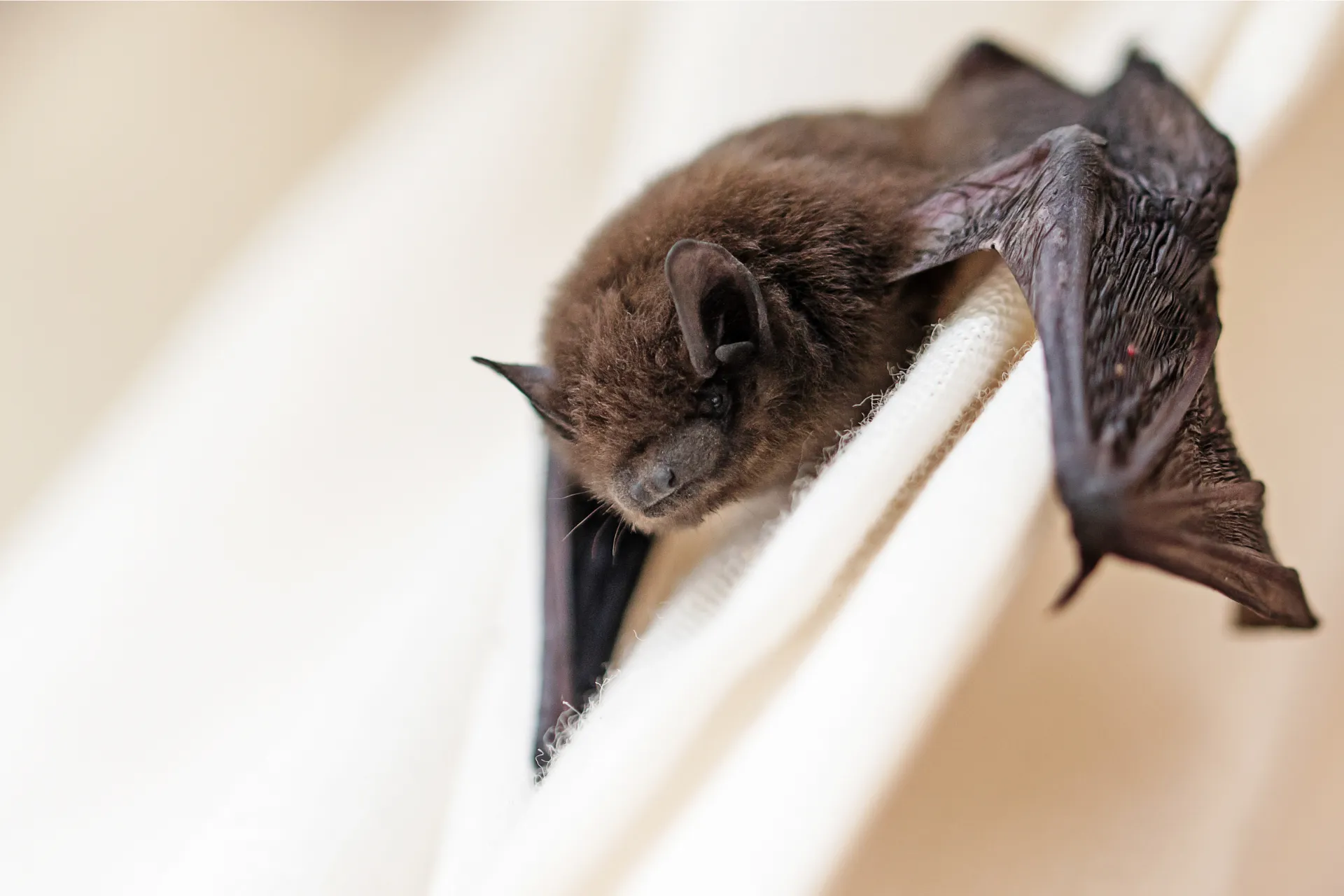
Why Bats Choose Certain Homes in Raleigh, NC (And How to Make Sure It’s Not Yours)
Most homeowners don’t think about bats until they hear something moving overhead. It usually starts small. A faint noise in the attic, something at dusk you cannot quite place, and then one evening you see it slipping out from the roofline and realize you are dealing with something real.
What catches people off guard is that bats do not randomly choose homes. If they are in your attic, there is a reason, and in most cases, several reasons working together. After enough inspections, you start to see the same patterns. Certain homes get hit again and again, not because the homeowner did anything wrong, but because the structure, location, and environment line up in a way that makes the property ideal.
If you understand what they are looking for, you can understand why they chose your home and how to make sure they do not come back.
Location Matters More Than People Realize
In the Raleigh area, a lot of homes sit right on the edge of perfect bat habitat. Trees, water, and open space create a steady food supply, and that is where everything starts.
Bats are not looking for your house first. They are following food.
If your property is near wooded areas, ponds, creeks, or even well irrigated landscaping, you are already in a zone where insect activity is high. Mosquitoes, moths, and beetles thrive in these conditions, and that is what bats are tracking every night. Once they establish a feeding pattern in an area, they start looking for somewhere nearby to roost, and that is where homes come into play.
Homes that sit on the quieter edges of neighborhoods tend to be even more attractive. Less daytime disturbance means a safer place to settle. From a homeowner’s perspective, these are all positives. Privacy, trees, and natural surroundings are exactly what people want, but those same features also make a property more appealing to wildlife.
Your Roofline Is More Inviting Than You Think
Most people assume bats need a large opening to get inside. They do not. A gap the size of your thumb is enough.
Homes with complex rooflines, multiple peaks, dormers, or layered construction tend to create more opportunities for these small gaps to develop. Over time, soffits separate, vents loosen, and flashing shifts just enough to create an opening that is almost impossible to spot from the ground.
In Raleigh, we primarily see Big Brown bats and Evening bats using these exact types of roofline gaps. Once they find an entry point, they will use it consistently. They are creatures of habit, and they do not need much space to get in and out.
Most homeowners never actually see them enter, but there is usually evidence if you know where to look. You will often find dark staining or rub marks near the entry point, caused by the oils on their bodies as they pass through the same gap night after night. It is one of the clearest signs that you are dealing with an active entry, and by the time it shows up, the problem is usually established.
Why Attics Are the Perfect Setup
From a bat’s perspective, your attic checks every box. It is dark, protected, and holds heat in a way that makes it more stable than most natural environments.
That trapped heat is what turns an attic into an ideal roosting space.
During the summer, attic temperatures rise and stay consistent, which is exactly what bats are looking for during maternity season. Female bats need a warm, stable place to give birth and raise their young, and attics provide that better than caves or hollow trees in many cases.
It is also secure. Predators are not getting in, and weather is not a factor. Once a colony settles into that kind of environment, there is very little reason for them to leave. That is why bat issues tend to repeat year after year if the structure is not properly sealed. They remember the location, and they come back to it.
The Food Source Is Right Outside Your Door
Even if bats are not living in your home yet, they may already be feeding around it every night.
Outdoor lighting quietly turns your home into a feeding zone.
Lights attract insects, and insects attract bats. The more lighting you have at night, the more activity you create around the property. Add in landscaping like gardens, fruit trees, and well maintained lawns, and you increase insect populations even further. Any standing water nearby only amplifies the effect.
From the bat’s perspective, your home becomes part of a complete system. There is food nearby, shelter above, and very little disturbance. That combination is what turns a passing bat into a permanent colony.
Small Maintenance Issues Turn Into Big Entry Points
The difference between a home that gets bats and one that does not usually comes down to small details. Not major damage, not obvious holes, but the kind of things that are easy to overlook.
A vent without proper screening, a gap along a roofline, a chimney that was never capped. These are the kinds of openings that go unnoticed until something finds them.
Bats only need one opening, and once they find it, they will use it over and over again.
Once they get inside, the situation builds. Guano begins to accumulate, odor develops, and over time it starts affecting insulation, air quality, and the structure itself. What started as a small vulnerability turns into a much larger issue simply because it was not addressed early.
Why This Problem Does Not Fix Itself
There is a common assumption that bats will eventually leave on their own. In reality, the opposite is usually true.
If a colony finds a structure that works, they will keep using it. In many cases, they return season after season. The longer they stay, the more established the colony becomes and the more impact it has on the home.
This is not a temporary problem. It is a pattern, and patterns do not change unless something interrupts them.
The Bigger Picture
In Raleigh, bat issues are not rare. They are just misunderstood. The environment, the climate, and the way homes are built all contribute to why these problems show up so consistently.
If bats chose your home, it was not random. Something about the property made it work for them, whether that is location, structure, access, or a combination of all three.
If this were my house, I would not guess. I would have the structure inspected, identify every potential entry point, and fix the problem at the source. That is how you stop it from happening again, and that is the difference between reacting to the problem and actually solving it.

Joe Zets and the expert technicians at Integrated Wildlife Management Inc. provide humane wildlife control, pest management, and property protection across Raleigh, Durham, and the Greater Triangle area. Specializing in bat extractions, raccoon removal, attic restoration, and full-home structural exclusion, Joe and his team share practical guidance to help homeowners resolve wildlife intrusions and protect their properties long-term.